MERMAID S PURSE (OME)
8,38 €
Epuisé
EAN :
9780571196210
| Date de parution | 01/04/2001 |
|---|---|
| Poids | 100g |
| Largeur | 10mm |
Plus d'informations
| EAN | 9780571196210 |
|---|---|
| Titre | MERMAID S PURSE (OME) |
| ISBN | 0571196217 |
| Auteur | HUGHES TED |
| Editeur | FABER ET FABER |
| Largeur | 10 |
| Poids | 100 |
| Date de parution | 20010401 |
| Nombre de pages | 0,00 € |
| Disponibilité | Epuisé |
Pourquoi choisir Molière ?
Efficacité et rapidité Commandé avant 16h livré demain
Économique et pratique Livraison dès 3,90 €
Facile et sans frais Retrait gratuit en magasin
Du même auteur
-
BIRTHDAY LETTERS
Ted Hughes's Birthday Letters are addressed, with just two exceptions, to Sylvia Plath, the American poet to whom he was married. They were written over a period of more than twenty-five years, the first a few years after her suicide in 1963, and represent Ted Hughes's only account of his relationship with Plath and of the psychological drama that led both to the writing of her greatest poems and to her death. The book became an instant bestseller on its publication in 1998 and won the Forward Prize for Poetry in the same year. 'To read [Birthday Letters] is to experience the psychic equivalent of "the bends". It takes you down to levels of pressure where the undertruths of sadness and endurance leave you gasping.' Seamus Heaney 'Even if it were possible to set aside its biographical value . . . its linguistic, technical and imaginative feats would guarantee its future. Hughes is one of the most important poets of the century and this is his greatest book.' Andrew MotionEpuiséVOIR PRODUIT15,09 € -
Birthday letters
Quelques mois avant sa mort, Ted Hughes (1930-1998), l'un des plus grands poètes anglais du XXe siècle, publie Birthday Letters, un recueil de lettres-poèmes adressées à son épouse l'écrivain Sylvia Plath, disparue trente-cinq ans auparavant. Accusé - parfois violemment - d'être responsable du suicide de la jeune femme, Ted Hughes avait toujours gardé le silence, refusant d'évoquer les sept années de leur vie commune. On découvre avec Birthday Letters qu'il n'a jamais cessé d'écrire à Sylvia, s'efforçant de garder intacte sa présence, se heurtant à l'incertitude des souvenirs, et à la hantise du "futur" qui les attendait et qu'ils n'auront pu vivre. Lors de sa publication en Angleterre et aux Etats-Unis, Birthday Letters a été vendu à plus de cinq cent mille exemplaires, événement sans précédent dans l'histoire éditoriale de la poésie.Sur commande en 2-4 joursCOMMANDER19,80 € -
Le géant de fer
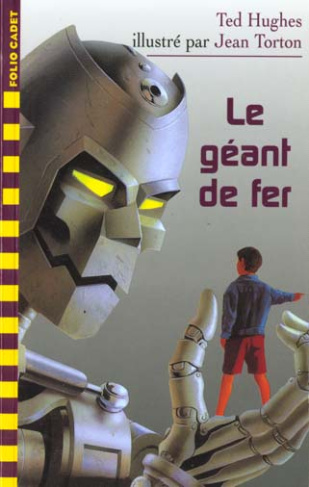
Le terrible géant de fer est de retour et fait des ravages dans la région. Il engloutit avec fracas toute la nourriture métallique qu'il trouve sur son passage : voitures, tracteurs, camions... Odilon a bien sa petite idée pour piéger le monstre. Mais un géant, si gourmand soit-il, est-il le plus grave des dangers qui menacent les hommes ... Clair, fort, captivant, voici un récit inoubliable d'un grand auteur d'aujourd'hui. Après avoir lu cette histoire, retrouve ses personnages dans les pages du supplément illustré.EpuiséVOIR PRODUIT9,50 € -
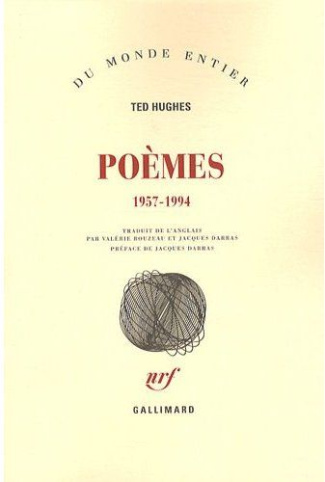
Poèmes. 1957-1994
Il y a des blaireaux écrasés, des agneaux qui naissent la tête tranchée, des saumons monstres tapis au fond de lacs écossais opaques, qu'on ferre et qui résistent de toute leur puissance vitale. Il y a des faucons, des brochets, des renards nocturnes, bref toute une galerie de prédateurs sur lesquels règne, cynique et dérisoire, un corbeau mythique du nom de Crow. Ted Hughes n'est pas qu'un poète animalier, comme on a trop vite cru. C'est un explorateur de la cruauté qui est au fond de l'être vivant, bête ou homme. Une espèce de poète darwinien moderne ayant croisé les chemins de la fable celtique ancienne. L'héritier de Yeats l'Irlandais mais aussi du guerrier de la Somme Wilfrid Owen, essayant d'articuler ensemble la beauté, la terreur et la pitié". Jacques Darras.Sur commande en 2-4 joursCOMMANDER25,40 €


Du même éditeur
-
-
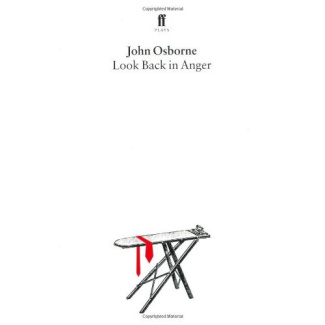
LOOK BACK IN ANGER
Anyone who's never watched someone die is suffering from a pretty bad case of virginity.Look Back in Anger premiered at the Royal Court Theatre, London, in 1956. 'John Osborne didn't contribute to British theatre: he set off a landmine called Look Back in Anger and blew most of it up.' Alan Sillitoe 'A story of youthful insecurity inflamed by lack of opportunity and the terrifying, destabilizing force of love . . . Jimmy Porter could fill an opera house with his bellowing hunger for a bigger, better life and a loyal love to share it with.' New York Times 'Look Back in Anger presents post-war youth as it really is. To have done this at all would be a signal achievement; to have done it in a first play is a minor miracle. All the qualities are there, qualities one had despaired of ever seeing on the stage - the drift towards anarchy, the instinctive leftishness, the automatic rejection of "official" attitudes, the surrealist sense of humour, the casual promiscuity, the sense of lacking a crusade worth fighting for and, underlying all these, the determination that no one who dies shall go unmourned . . . I doubt if I could love anyone who did not wish to see Look Back in Anger. It is the best young play of its decade.' Kenneth Tynan, Observer'How bracing, and, yes, even shocking, its white-hot fury remains.' The Times This edition includes an introduction by Michael Billington and an afterword by David Hare.EpuiséVOIR PRODUIT15,20 € -
-