

Le Retour
11,10 €
En stock
EAN :
9782253194569
1981. Tredower House, en Cornouailles. A l'occasion du mariage de sa nièce, Chris est de retour dans le domaine que son grand-oncle Joshua a acquis entre les deux guerres. Au cours de la cérémonie, Nick, son ami d'enfance, surgit et affirme détenir la preuve que son père, exécuté pour avoir commandité le meurtre de Joshua en 1947, était innocent. Le lendemain, on retrouve Nick pendu. Chris décide alors de faire la lumière sur la mort de Joshua. Il est loin de se douter des dangers qu'il encourt en exposant la légende familiale à la lumière de la vérité.
Commandé avant 16h, livré demain
Catégories
| Nombre de pages | 516 |
|---|---|
| Date de parution | 02/09/2015 |
| Poids | 280g |
| Largeur | 110mm |
Plus d'informations
| EAN | 9782253194569 |
|---|---|
| Titre | Le Retour |
| Auteur | Goddard Robert ; Leplat Elodie |
| Editeur | LGF |
| Largeur | 110 |
| Poids | 280 |
| Date de parution | 20150902 |
| Nombre de pages | 516,00 € |
| Disponibilité | En stock |
Pourquoi choisir Molière ?
Efficacité et rapidité Commandé avant 16h livré demain
Économique et pratique Livraison dès 3,90 €
Facile et sans frais Retrait gratuit en magasin
Du même auteur
-

In Pale battalions
Extrait Chapter OneChildhood memories fit their own intricate pattern. They cannot be made to conform to the version of our past we try to impose upon them. Thus I could say that Lord and Lady Powerstock and the home they gave me at Meongate more than compensated for being an orphan, that a silver spoon easily took the place of my mother's smile. I could say it--but every recollection of my early years would deny it.Meongate must once have been the crowded, bustling house of a cheerful family, as the Hallowses must once have been that family. Every favour of nature in its setting where the Hampshire downs met the pastures of the Meon valley, every effort of man in its spacious rooms and landscaped park, had been bestowed on the home of one small child.Yet it was not enough. When I was growing up at Meongate in the early 1920s, most of its grandeur had long since departed. Many of the rooms were shut up and disused, much of the park turned over to farmland. And all the laughing, happy people I imagined filling its empty rooms and treading its neglected lawns had vanished into a past beyond my reach.I grew up with the knowledge that my parents were both dead, my father killed on the Somme, my mother carried off by pneumonia a few days after my birth. It was not kept from me. Indeed, I was constantly reminded of it, constantly confronted with the implication that I must in some way bear the blame for the shadow of grief, or of something worse, that hung over their memory. That shadow, cast by the unknown, lay at the heart of the cold, dark certainty that also grew within me: I was not wanted at Meongate, not welcomed there, not loved.It might have been different had my grandfather not been the grave, withdrawn, perpetually melancholic man that he was. I, who never knew him when he was young, cannot imagine him as anything other than the wheelchair-bound occupant of his ground-floor rooms, deprived by his own morbidity, as much as by the lingering effects of a stroke, of all warmth and fondness. When Nanny Hiles took me, as she regularly did, to kiss him goodnight, all I wanted to do was escape from the cold, fleeting touch of his flesh. When, playing on the lawn, I would look up and see him watching me from his window, all I wanted to do was run away from the mournful, questing sadness in his eyes. Later, I came to sense that he was waiting, waiting for me to be old enough to understand him, waiting in the hope that he would live to see that day.Lady Powerstock, twenty years his junior, was not my real grandmother. She was buried in the village churchyard, another ghost whom I did not know and who could do nothing to help me. I imagined her as everything her successor was not--kind, loving and generous--but it did me no good. Olivia, the woman I was required to address as Grandmama in her place, had once been beautiful and, at fifty, her looks were still with her, her figure still fine, her dress sense impeccable. That we were not related by blood explained, to my satisfaction, why she did not love me. What I could not explain was why she went so far as to hate me, but hate me she undoubtedly did. She did not trouble to disguise the fact. She let it hover, menacing and unspoken, at the edge of all our exchanges, let it grow as an awareness between us, a secret confirmation that she too was only waiting, waiting for death to remove her husband and with him any lingering restraint on her conduct towards me. There was an air of practised vice about her that was to draw men all her life, an air of voluptuous pleasure at her own depravity that made her hatred of me seem merely instinctive. Yet there was always more to it than that. She had drawn some venom from whatever part she had played in the past of that house and had reserved it for me.My only friend in those days, my only guide through Meongate's hidden perils, was Fergus, the taciturn and undemonstrative major-domo, "shifty" as Olivia described him and certainly not as deferential as he should have been, but none the less my sole confidant. Sally, the sullen maid, and humourless Nanny Hiles both went in awe of Olivia, but Fergus treated her with an assurance, bordering on disrespect, that made him my immediate ally. A cautious, solitary, pessimistic man who had expected little from life and consequently been spared many disappointments, perhaps he took pity on a lonely child whose plight he understood better than she did herself. He would take me on covert expeditions through the grounds, or down to the wooded reach of the Meon where he fished of a quiet afternoon, or into Droxford in the trap, when he would buy me a twist of sherbet and leave me sitting on the wall outside Wilsmer's saddlery whilst he went in to haggle over a new bridle for the pony. For such brief moments as those, kicking my heels on Mr. Wilsmer's wall and eating my sherbet in the sunshine, I was happy. But such moments did not last.It was Fergus who first showed me my father's name, recorded with the other war dead of the village, on a plaque at the church. Their Name Liveth for Evermore, the inscription said, and his name--Captain the Honourable John Hallows--is all that did live for me. I would stare at it for what seemed like hours trying to conjure up the real living and breathing father that he had never been to me, seeing only those stiff, expressionless, uniformed figures preserved by photographs in back copies of the Illustrated London News, glimpsing no part of his true self beyond the neatly carved letters of his name.As for my mother, of her there was no record at all, no grave, no memorial of any kind. Fergus, when I questioned him, prevaricated. My mother's grave, if she had one, was far away--and he did not know where. There were, I was to understand, limits to what even he could tell me. Whether he suggested it or not I cannot remember, but, for some reason, I decided to ask Olivia. I cannot recall how old I was when it happened, but I had followed her into the library, where she often went to look at a painting that hung there."Where is my mother's grave?" I said bluntly, partly intending the question to be a challenge. All hatred is, in time, reciprocated and I had come to hate Olivia as much as she hated me; I did not then appreciate how dangerous an enemy she could be.She did not answer in words. She turned aside from that great, high, dark painting and hit me so hard across the face that I nearly fell over. I stood there, clutching the reddening bruise, too shocked by the pain of it to cry, and she stooped over me, her eyes blazing. "If you ever ask that question again," she said, "if you ever mention your mother again, I'll make you suffer."The mystery of my mother thenceforth became the grand and secret obsession of my childhood. My father's death, after all, had a comforting simplicity about it. Every November there was an Armistice Parade in the village to commemorate the sacrifice of Captain the Honourable John Hallows and the many others like him. Though not permitted to join the Brownie troop that took part in the parade, I was allowed to go and watch and could imagine myself marching with all the little girls who, like me, had lost their father. But, at the end of the parade, they went home to their mothers; I could not even remember mine.Sometimes, though, I thought I could remember her. It was impossible, of course, if what I had been told of her was true, but Olivia had succeeded in making me doubt everything I had not personally experienced, and there was one dim, early memory, seemingly at the very dawn of my recollection, to sustain what I so wanted to believe.I was standing on the platform at Droxford railway station. It was a hot summer's day: I could feel the heat of the gravel seeping up through my shoes. A train was standing at the platform, great billows of smoke rising as the engine gathered steam. The man standing beside me, who had been holding my hand, stooped and lifted me up, cradling me in his arms to watch the train pull out. He was stout and white-haired. I remember the rumble of his voice and the brim of his straw hat touching my head as he raised his free hand to wave. And I was waving too, at a woman aboard the train who had wound down the window and was leaning out, waving also and smiling and crying as she did so. She was dressed in blue and held a white handkerchief in her right hand. And the train carried her away. And then I cried too and the stout old man hugged me, the brass buttons on his coat cold against my face.I recounted the memory to Fergus one day, when we were returning from a mushrooming expedition. When I had finished, I asked him who he thought the old man was."Sounds like old Mr. Gladwin," he replied. "The first Lady Powerstock's father. He lived here . . . till she sent him away." By she Fergus always meant Olivia."Why did she do that?""She'd have had her reasons, I don't doubt.""When did he go?""The summer of 1920, when you were three. Back to Yorkshire, so they say. A proper caution, was Mr. Gladwin.""Who was the pretty lady, Fergus?""That I don't know.""Was she . . . my mother?"He pulled up and looked down at me with a frown. "That she was not," he said with deliberate slowness. "Your mother passed away a few days after she had you. You know that. No amount of wanting is going to make you remember her.""Then . . . who was the pretty lady?"His frown became less kindly. "I told you: I don't know. That Mr. Gladwin, he was a close one. Now, look to that napkin or you'll pitch your breakfast into the lane--and mine with it."If the pretty lady wasn't my mother, who was she? What was old Mr. Gladwin, my great-grandfather, to her? There were no answers within my reach, just the secret hope I went on harbouring that maybe my mother wasn't really dead at all, just ....Sur commande en 6-10 joursCOMMANDER12,50 € -
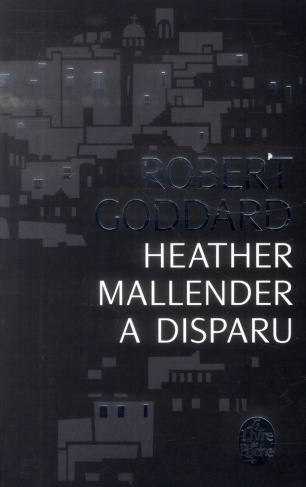
Heather Mallender a disparu Collector
Venue séjourner sur l'île de Rhodes pour se remettre d'un drame personnel, Heather Mallender disparaît brusquement au cours d'une balade en montagne, presque sous les yeux d'Harry Barnett, le gardien de la villa où elle résidait. Soupçonné de l'avoir assassinée, Harry est laissé en liberté, faute de preuves. Ce quinquagénaire alcoolique et désabusé décide alors de mener l'enquête à partir de sa seule piste: les vingt-quatre dernières photos prises par la jeune femme. Cliché après cliché, il va ainsi reconstituer les dernières semaines de sa vie, entre la Grèce et l'Angleterre. Mais plus il apprend de choses sur le passé d'Heather et plus le mystère s'épaissit. Robert Goddard signe avec Heather Mallender a disparu un pavé à suspense à devenir asocial et insomniaque. Olivia de Lamberterie, Elle. Rendez-vous à la fin, grandiose et inattendue. Vraiment. Marie Rogatien, Le Figaro Magazine.EpuiséVOIR PRODUIT10,75 € -

L'héritage Davenall
1882. St John's Wood. Un homme se présente aux portes de la maison de Constance Trenchard. A la stupéfaction de tous, il prétend être James Davenall, l'ancien fiancé de Constance, disparu une semaine avant leur mariage et que tout le monde pense mort depuis dix ans. Si la jeune femme le reconnaît et le croit, toute la famille de James Davenall, en particulier sa mère et son frère, Sir Hugo, héritier du prestigieux domaine de Cleave Court, prétend qu'il s'agit d'un imposteur. Sur fond de secrets de famille, c'est le début, d'un incroyable puzzle qui, après de multiples rebondissements, connaîtra une conclusion tout à fait inattendue.En stock (dernières pièces)COMMANDER12,50 € -

Heather Mallender a disparu
Journaliste puis enseignant, Robert Goddard a dirigé un établissement scolaire dans le Devon pendant plusieurs années avant de se consacrer entièrement à l'écriture. Il vit aujourd'hui à Truro, dans les Cornouailles.En stockCOMMANDER11,90 €


Du même éditeur
-

-

L'Ombre douce
1954, dans un hôpital militaire de Hanoi, Yann, un soldat breton, est soigné par Mai. Ils tombent amoureux, mais le père de la jeune fille l'a promise à un autre. Elle s'insurge, elle est bannie de la famille... Ils se marient en toute hâte, avant que Yann rejoigne la cuvette de Diên Biên Phu. Après la défaite de l'armée française, Yann est emmené dans un camp d'internement. Dans une langue poétique, avec grâce et pudeur, Hoai Huong Nguyen peint le Vietnam d'hier et un amour qui affronte la violence d'une guerre. L'histoire bouleversante de Mai et de Yann laisse percer la lumière des humbles héros qui croient à la liberté et à l'absolu malgré les vicissitudes de l'Histoire. Tout est là : l'Histoire, l'histoire, la manière de les faire s'imbriquer, la netteté de l'écriture, la volonté de trouver une parole adéquate à la tragédie, la complexité des psychologies... "Un instant de littérature pure." Yann Moix, Le Figaro littéraire.EpuiséVOIR PRODUIT7,20 € -
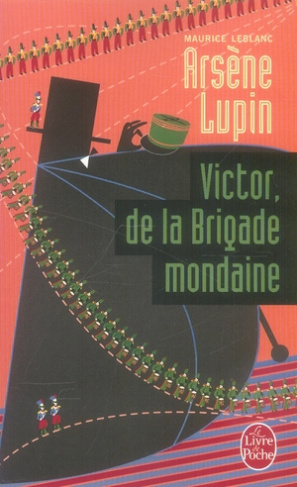
Victor, de la Brigade mondaine
Avant le vol des bons de la Défense nationale et les assassinats qui suivirent, la renommée de Victor, de la Brigade mondaine, n'excédait pas le cercle restreint de ses chefs et de ses collègues. Il fallut, pour le mettre en évidence, qu'apparût brusquement en face de lui cet extraordinaire, ce formidable personnage d'Arsène Lupin, qui allait donner à cette ténébreuse affaire sa signification et son intérêt spécial. Les qualités déjà remarquables du vieil inspecteur furent portées à leur paroxysme par le prodigieux adversaire que lui opposaient les circonstances. C'est leur lutte sournoise, ardente, implacable, poursuivie dans l'ombre d'abord, puis en pleine clarté, que nous raconte Victor, de la Brigade mondaine.EpuiséVOIR PRODUIT7,90 € -
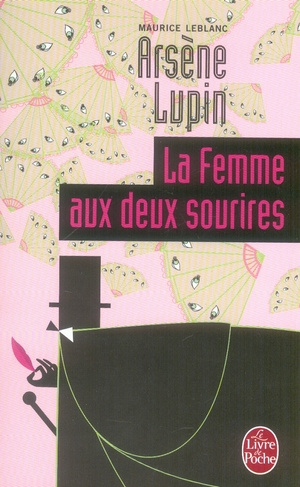
La femme aux deux sourires
Antonine?? Clara?? laquelle de ces deux figures constituait la véritable personnalité de l'être charmant qu'il avait rencontré? Elle avait à la fois le sourire le plus franc et le plus mystérieux, le regard le plus candide et les yeux les plus voluptueux, l'aspect le plus ingénu et l'air le plus inquiétant. "Arsène Lupin, dit Raoul, résout, bien sûr, le premier, une ténébreuse affaire de meurtre, et avec quelle maestria! Amoureux, il risque sa vie. Ingénieux, il s'échappe alors qu'il est cerné par la police ou les truands. Insolent, il joue des tours aux deux.Le gentleman-cambrioleur est au mieux de sa forme pour notre plus grand bonheur. "EpuiséVOIR PRODUIT5,85 €


De la même catégorie
-
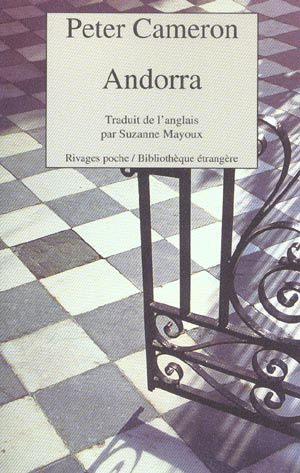
Andorra
L'Andorra du roman obsédant de Peter Cameron est inspiré d'une principauté isolée dans les Pyrénées. Transformée en un paradis éclaboussé de soleil, chacun y a quelque chose à cacher. C'est là que vient Alexander Fox, pensant y trouver réconfort et refuge, alors qu'il n'y rencontre que des souvenirs inquiétants de son passé. Andorra est un roman brillant et inventif sur le mensonge, le désir, et la tromperie de la mémoire.EpuiséVOIR PRODUIT8,15 € -
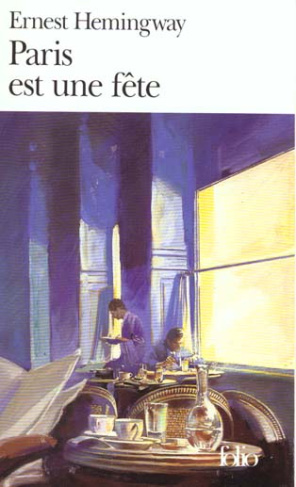
Paris est une fête
Ce volume constitue une occasion de lire un texte à la fois plus complet et plus proche del'original que le manuscrit qui constituait, pour l'auteur, une sorte de mémoire de ses jeunesannées d'écrivain à Paris. Au cours de l'été 1957, il commença à travailler sur les « Vignettes parisiennes », comme il appelait alors le livre. Il y travailla à Cuba et à Ketchum, et emporta même le manuscrit avec lui en Espagne pendant l'été 59, puis à Paris, à l'automne de cette même année. En novembre 59, Hemingway avait terminé la première version d'un texte auquel il ne manquait qu'une introduction et le dernier chapitre. Paris est une fête fut publié de manière posthume en 1964; il concerne les années parisiennes 1921 à 1926. Pendant les trois années, ou presque, qui s'écoulent entre la mort de l'auteur et la première publication de Paris est une fête, le manuscrit subit d'importants amendements de la main des éditeurs, de Mary Hemingway et de la maison Scribner. Quelques textes que Hemingway avait prévu d'inclure dans l'ouvrage ont été supprimés, tandis qu'ont été ajoutés d'autres fragments, qu'il avait certes destinés à cet ouvrage mais n'avait finalement pas retenus. Se trouve aujourd'hui restitué et présenté pour la première fois le texte manuscrit original tel qu'il était au moment de la mort de l'écrivain en 1961.EpuiséVOIR PRODUIT8,60 € -

Un fantôme américain
A Santa Fe, les clients de "La Posada" sont formels : l'hôtel est hanté. Le fantôme de Julia Staab, une émigrante juive-allemande ayant vécu au XIXe siècle, existe bel et bien. De son visage blême émane une aura de tristesse. De quel outrage son spectre réclame-t-il justice ? Nul ne le sait. Sauf Hannah Nordhaus, son arrière-arrière-petite-fille qui part sur les traces de son ancêtre et honore sa mémoire. Un dernier hommage qui, peut-être, permettra à Julia de trouver le repos éternel.Sur commande en 2-4 joursCOMMANDER8,00 € -
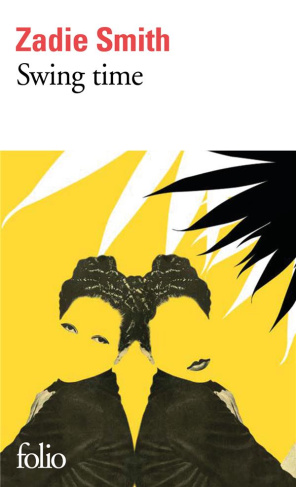
Swing Time
Dans un quartier populaire de Londres, deux petites filles métisses nouent une relation fusionnelle autour d'un même rêve : devenir danseuses. Mais seule Tracey, la plus effrontée, a du talent. L'autre possède des idées : sur le rythme et le temps, les corps et la musique noire, ce que signifie appartenir, ce que signifie être libre. Leur amitié explosive s'interrompt brusquement au début de la vingtaine. Empruntant des chemins différents vers un destin qu'elles imaginent lumineux, chacune s'égarera pourtant en route. Débordant d'énergie, d'humour et d'émotion, Swing Time raconte les espoirs et les désillusions de ceux qui suivent la danse et de ceux qui la mènent.Sur commande en 2-4 joursCOMMANDER10,00 €


