The Empress Eugénie in England : Art, Architecture, Collecting.. Art, Architecture, Collecting
This absorbing book tells the story of Empress Eugénie (1826-1920), the wife of Napoleon III and the last Empress-Consort of France. Today she is remembered for her physical beauty, for her influence as a taste maker and for her glittering contribution to the second imperial court - but she outlived the Second Empire by half a century and lived in exile in England. The Empress bought the Farnborough Hill estate in 1880, following a decade of personal tragedy : the collapse of the Second Empire (1852-70), the death of Napoleon III, and the loss of her only child. The death of the Prince Imperial in 1879, aged 23, ended all hope of a Bonapartist restoration. With the imperial succession removed to another branch of the family, Eugénie resolved to create a permanent monument to her husband and son. This was her primary reason for moving to Farnborough. This book describes the little-known assemblage of art and architecture that she created there in the 1880s. Geraghty analyses the principal buildings on the imperial estate : Farnborough Hill itself, which was extensively remodelled for the court-in-exile that Eugénie maintained there from 1880 to 1920 ; and St Michael's Abbey, the spectacular domed mausoleum that the Empress built on an adjacent hill in 1883-88. These projects were entrusted to a French architect, Hippolyte Destailleur (1822-93), whose erudite designs situated the history of the Second Empire within the longer history of French architecture and design. Geraghty also provides the fi rst detailed account of the lost interiors of Farnborough Hill. He traces the origins of the collection back to the Second Empire, and-drawing upon historic photos, inventories, and sale catalogues-he shows how the collection was displayed in the principal rooms of the house. Primarily dynastic in purpose, the display included a major sequence of Bonaparte family portraits, including works by David, Gérard, Winterhalter, and Carpeaux. Eugénie also had an important collection of decorative arts, including Gobelins tapestries, Sèvres porcelain, and royal French furniture. Composed by the Empress herself, the display at Farnborough Hill was the last manifestation of the 'Louis XVI-Impératrice' mode of interior decoration that she had popularised in the 1850s. It was also, in its juxtaposition of modern and historic pieces, the fi nal expression of the nouvelle sociabilité of the second imperial court. Finally, the book describes the breakup of the estate in 1927, when the house was sold to a convent school and the collection was dispersed at auction. Today, only the Mausoleum functions as Eugénie originally envisaged. Geraghty, however, recovers the totality of Eugenie's vision for Farnborough. In so doing, he describes how the Napoleonic ideal, for one fi nal time, was made visible through art, architecture, and collecting.
| Nombre de pages | 240 |
|---|---|
| Date de parution | 09/09/2022 |
| Poids | 1 690g |
| Largeur | 245mm |
| EAN | 9781916237827 |
|---|---|
| Titre | The Empress Eugénie in England : Art, Architecture, Collecting.. Art, Architecture, Collecting |
| Auteur | Geraghty Anthony |
| Editeur | HOLBERTON |
| Largeur | 245 |
| Poids | 1690 |
| Date de parution | 20220909 |
| Nombre de pages | 240,00 € |
| Disponibilité | Sur commande en 4-6 jours |
Pourquoi choisir Molière ?
Du même auteur
-
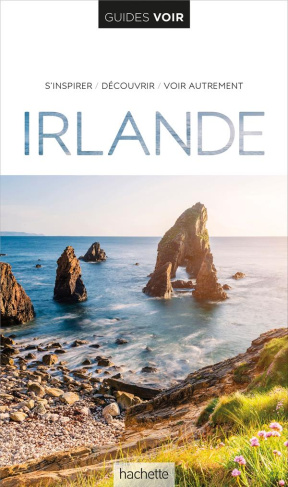
Irlande
Résumé : Votre voyage commence dès la première page ! Les guides Voir changent totalement ! Dès les premières pages, laissez-vous inspirer par l'Irlande : Dublin, les lacs du Connemara, la légendaire Chaussée des Géants ou l'étonnant site préhistorique de Newgrange... Le guide Voir couvre toute l'Irlande, des sites incontournables aux coins plus secrets. Le nouveau guide Voir Irlande, c'est : - Une présentation moderne, des pages qui se lisent comme un magazine, illustrées de splendides photos. - Un nouveau chapitre d'introduction tout en images pour vous inspirer et découvrir tout ce qui compte en Irlande. - Tout ce qu'il faut savoir pour vous organiser : conseils d'experts, cartes claires, grands itinéraires. - Une organisation claire par région : Dublin, le Cork et le Kerry, the Lower Shannon, l'ouest de l'Irlande, le nord-ouest de l'Irlande, les Midlands et le nord de l'Irlande. - Des dessins réalisés à la main des sites exceptionnels : le Trinity College, le château de Dublin, la cathédrale Christ Church, le manoir irlandais Powerscourt, Bantry House... - Des cartes colorées et détaillées pour vous orienter facilement. - Les bons conseils pour un voyage inoubliable : où prendre la photo parfaite, où en prendre plein les yeux avec des panoramas sublimes et où échapper à la foule. - Les adresses les plus authentiques pour dormir, manger, boire un verre et faire les boutiques.EpuiséVOIR PRODUIT21,60 € -
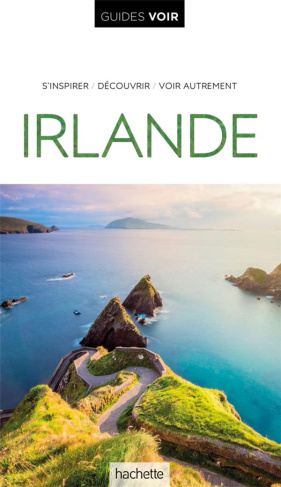
Irlande
Cette nouvelle formule du Guide Voir, plus légère, plus souple et encore plus illustrée, vous fait découvrir l'Irlande avec des dessins uniques des grands sites, des visites pas à pas des ville principales, des centaines de photos et des plans détaillés. Un très beau guide pour voyager ou rêver ! - Une présentation moderne, des pages qui se lisent comme un magazine, illustrées de splendides photos. - Un nouveau chapitre d'introduction tout en images pour vous inspirer et découvrir tout ce qui compte en Irlande. - Tout ce qu'il faut savoir pour vous organiser : conseils d'experts, cartes claires, grands itinéraires. - Une organisation claire par région : Dublin, le Cork et le Kerry, the Lower Shannon, l'Ouest de l'Irlande, les Midlands et le Nord de l'Irlande. - Des dessins des sites exceptionnels : le Trinity College, le château de Dublin, la cathédrale Christ Church, le manoir irlandais Powerscourt, Bantry House... - Des cartes colorées et détaillées pour vous orienter facilement. - Les bons conseils pour un voyage inoubliable : où prendre la photo parfaite, où en prendre plein les yeux avec des panoramas sublimes et où échapper à la foule. - Les adresses les plus authentiques pour dormir, manger, boire un verre et faire des achatsSur commande en 2-4 joursCOMMANDER23,06 € -
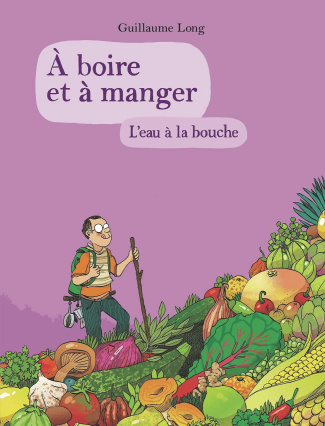
A boire et à manger Tome 5
Comment réussir ses spaghetti vongole ? Quel est le secret du gâteau au chocolat 2.0 ? Comment pimper sa mayonnaise ? Quelle est l'histoire du kebab historique ? Guillaume Long revient nous faire pétiller les papilles en travaillant nos zygomatiques, avec quatre saisons de recettes gourmandes, de chroniques gastronomiques et d'anecdotes ultra savoureuses...Notes Biographiques : Guillaume Long est né en 1977 à Genève, au pays du chocolat et du fromage. Dès son plus jeune âge, il se passionne pour la cuisine et observe souvent sa mère aux fourneaux, ce qui n'empêche pas son premier pain d'être remplacé in extremis par celui du boulanger sur la table familiale. Diplômé de l'école des beaux-arts de Saint-Étienne en 2002, il obtient l'année suivante le prix Töpffer pour son album Les sardines sont cuites. Ensuite, il mitonne plusieurs livres pour petits et grands et travaille pour la presse, toujours entre deux repas. Depuis 2009, ce fin gourmet est un homme comblé puisqu'il marie avec humour cuisine et bande dessinée dans un blog gastronomique hébergé sur le site du journal Le Monde, et savamment intitulé À boire et à manger.Sur commande en 2-4 joursCOMMANDER24,00 €


Du même éditeur
-

'A Perfect Eye and Steady Hand'. Goldsmithing in Tudor & Stuart London
This handsomely illustrated book is published to mark the opening of the Goldsmiths' Gallery at the new London Museum in Smithfield. Showcasing the Cheapside Hoard alongside historic treasures from the Goldsmiths' Company's collection, it takes readers on a global journey in the wake of plate, jewels and gemstones - and the people who made, traded and treasured them. Gold and silver are precious - prized as a form of portable capital, essential for the mints and coinage, used to express power and status. Yet great skill was needed in the buying, the fashioning and the selling of either metal. As fashions changed, much early modern plate and jewellery was melted down when sentiment gave way to market value. This makes the survival of the Goldsmiths' Company's holdings exceptional - and the Cheapside Hoard, unearthed by workmen in 1912 after lying undisturbed for nearly 300 years - nothing short of extraordinary. Comprising over 500 pieces - made of emeralds, diamonds and sapphires sourced from across the world, worked into mesmerising brooches, buttons, necklaces and rings - the Cheapside Hoard is the greatest single collection of Elizabethan and Stuart jewellery in the world. The book places the Hoard in its historical and global context, celebrating it alongside highlights from the Goldsmiths' Company's collection. It offers four main chapters on Elizabethan and early Stuart London, the goldsmiths' trade, the Hoard itself, and the city's global networks. Interwoven thematic sections explore craftsmanship, personal stories, trade practices, taste and fashion - bringingtogether jewels and plate to reveal a rich tapestry of skill, style and exchange.PréventePRÉCOMMANDER35,00 € -

-
-