

Robinson Crusoé
La traduction française de Robinson Crusoé encore en usage de nos jours est celle de Petrus Borel, à peine dépoussiérée et qui date de 1836! Elle est non seulement vétuste, avec un style lissé et assez ampoulé, mais très souvent inexacte, sinon fautive, le XIXe siècle n'ayant pas du tout les critères actuels en matière de traduction. Or il se trouve que Defoe pratiquait une écriture sèche, haletante, marquée par une sorte d'urgence, très moderne justement. Françoise du Sorbier, universitaire spécialiste de Defoe et brillante traductrice, a mis tout son talent et son expertise au service de cette retraduction nécessaire et qui lui tenait à coeur depuis longtemps. Sa traduction précise, fluide, limpide, fera date. Elle permet de redécouvrir avec bonheur ce classique des classiques qui n'a pas pris une ride.
| Nombre de pages | 418 |
|---|---|
| Date de parution | 04/01/2012 |
| Poids | 470g |
| Largeur | 140mm |
| EAN | 9782226238412 |
|---|---|
| Titre | Robinson Crusoé |
| Auteur | Defoe Daniel ; Du Sorbier Françoise ; Déon Michel |
| Editeur | ALBIN MICHEL |
| Largeur | 140 |
| Poids | 470 |
| Date de parution | 20120104 |
| Nombre de pages | 418,00 € |
| Disponibilité | Epuisé |
Pourquoi choisir Molière ?
Du même auteur
-

Les Aventures de Robinson Crusoé
RESUME : "Les Aventures de Robinson Crusoé" est un récit captivant de survie et de résilience écrit par Daniel Defoe. Publié pour la première fois en 1719, ce roman raconte l'histoire de Robinson Crusoé, un jeune homme avide d'aventures maritimes. Après un naufrage, il se retrouve échoué sur une île déserte, où il doit apprendre à survivre seul, loin de toute civilisation. Crusoé construit un abri, cultive la terre et élève des animaux pour subvenir à ses besoins. Au fil des années, il développe des compétences de survie impressionnantes et adopte une routine qui lui permet de maintenir sa santé physique et mentale. La solitude de l'île pousse Crusoé à réfléchir sur sa vie, sa foi et son existence. Sa rencontre avec Vendredi, un indigène qu'il sauve des cannibales, marque un tournant dans son isolement. Ensemble, ils forment un lien de camaraderie et d'entraide. Le roman explore des thèmes complexes tels que la colonisation, la religion, et la nature humaine, tout en offrant une critique subtile de la société européenne de l'époque. Defoe parvient à capturer l'essence de l'esprit humain face à l'adversité, rendant ce livre intemporel et universellement apprécié. A travers les péripéties de Crusoé, le lecteur est invité à réfléchir sur la capacité de l'homme à s'adapter et à triompher des défis les plus ardus. L'AUTEUR : Daniel Defoe, né en 1660 à Londres, est un écrivain et journaliste anglais, souvent considéré comme l'un des pionniers du roman moderne. Fils d'un boucher, il reçoit une éducation qui le prépare à une carrière dans le commerce, mais il choisit finalement de se consacrer à l'écriture. Defoe écrit sur une variété de sujets, allant de la politique à l'économie, en passant par la religion. Son oeuvre la plus célèbre, "Robinson Crusoé", est souvent citée comme le premier véritable roman en langue anglaise. En plus de ses contributions littéraires, Defoe est également connu pour ses pamphlets politiques, qui lui valent parfois des ennuis avec les autorités. Son style journalistique et son sens du détail réaliste confèrent à ses écrits une authenticité qui séduit les lecteurs de son temps. Au-delà de "Robinson Crusoé", Defoe a écrit de nombreux autres romans, dont "Moll Flanders" et "Journal de l'année de la peste", qui témoignent de son talent à capturer la complexité de la condition humaine. Daniel Defoe meurt en 1731, laissant derrière lui un héritage littéraire qui continue d'influencer les écrivains contemporains.Impression à la demandeCOMMANDER19,50 € -

Aventures de Robinson Crusoé
Les ""Aventures de Robinson Crusoé"" de Daniel Defoe est un roman captivant qui raconte l'histoire extraordinaire d'un homme naufragé sur une île déserte. Publié pour la première fois en 1719, ce livre est devenu un classique de la littérature anglaise. L'histoire commence lorsque Robinson Crusoé, un jeune homme avide d'aventure, décide de quitter sa vie confortable en Angleterre pour partir en mer. Cependant, son voyage tourne rapidement au cauchemar lorsqu'il est victime d'une tempête dévastatrice et se retrouve seul survivant sur une île isolée. Le roman relate les efforts incroyables de Robinson pour survivre dans cet environnement hostile. Il apprend à chasser, à pêcher et à cultiver ses propres aliments. Il construit également un abri et fabrique des outils à partir des ressources limitées de l'île. Au fil des années, il développe des compétences et une résilience remarquables, devenant ainsi un véritable Robinson Crusoé. Pendant son séjour sur l'île, Robinson fait également la rencontre d'un indigène qu'il nomme Vendredi. Ensemble, ils forment une amitié profonde et apprennent à se comprendre malgré leurs différences culturelles. Les ""Aventures de Robinson Crusoé"" est bien plus qu'un simple récit d'aventures. C'est une réflexion sur la solitude, la survie et la capacité de l'homme à s'adapter à des situations extrêmes. Le roman explore également des thèmes tels que la religion, la morale et la nature humaine. Avec son style d'écriture captivant et son personnage principal inoubliable, ""Les Aventures de Robinson Crusoé"" est un livre qui continue de fasciner les lecteurs du monde entier depuis plus de trois siècles. C'est un récit intemporel qui nous rappelle la force de la volonté humaine et la capacité de l'homme à surmonter les obstacles les plus difficiles. Extrait : ""En peu de temps je commençai à lui parler et à lui apprendre à me parler. D'abord je lui fis savoir que son nom serait Vendredi ; c'était le jour où je lui avais sauvé la vie, et je l'appelai ainsi en mémoire de ce jour."""Impression à la demandeCOMMANDER16,99 € -
THE FORTUNES AND MISFORTUNES OF THE FAMOUS MOLL FLANDERS - COMPLEMENTED WITH THE BIOGRAPHY OF THE AU
The Fortunes and Misfortunes of the Famous Moll Flanders tells the story of the fall and eventual redemption of a lone woman in 17th-century England. It purports to be the true account of the life of the eponymous Moll, detailing her exploits from birth until old age. The titular heroine appears as a whore, bigamist, and thief, lives in The Mint, commits adultery and incest, and yet manages to retain the reader's sympathy.Impression à la demandeCOMMANDER19,95 € -
ROBINSON CRUSOE
Extrait I was born in the Year 1632, in the City of York, of a good Family, tho not of that Country, my Father being a Foreigner of Bremen, who settled first at Hull: He got a good Estate by Merchandise, and leaving off his Trade, lived afterward at York, from whence he had married my Mother, whose Relations were named Robinson, a very good Family in that Country, and from whom I was called Robinson Kreutznaer; but by the usual Corruption of Words in England, we are now called, nay we call our selves, and write our Name Crusoe, and so my Companions always call’d me.I had two elder Brothers, one of which was Lieutenant Collonel to an English Regiment of Foot in Flanders, formerly commanded by the famous Coll. Lockhart, and was killed at the Battle near Dunkirk against the Spaniards: What became of my second Brother I never knew any more than my Father or Mother did know what was become of me.Being the third Son of the Family, and not bred to any Trade, my Head began to be fill’d very early with rambling Thoughts: My Father, who was very ancient, had given me a competent Share of Learning, as far as House-Education, and a Country Free-School generally goes, and design’d me for the Law; but I would be satisfied with nothing but going to Sea, and my Inclination to this led me so strongly against the Will, nay the Commands of my Father, and against all the Entreaties and Perswasions of my Mother and other Friends, that there seem’d to be something fatal in that Propension of Nature tending directly to the Life of Misery which was to be-fal me.My Father, a wise and grave Man, gave me serious and excellent Counsel against what he foresaw was my Design. He call’d me one Morning into his Chamber, where he was confined by the Gout, and expostulated very warmly with me upon this Subject: He ask’d me what Reasons more than a meer wandring Inclination I had for leaving my Father’s House and my native Country, where I might be well introduced, and had a Prospect of raising my Fortunes by Application and Industry, with a Life of Ease and Pleasure. He told me it was for Men of desperate Fortunes on one Hand, or of aspiring, superior Fortunes on the other, who went abroad upon Adventures, to rise by Enterprize, and make themselves famous in Undertakings of a Nature out of the common Road; that these things were all either too far above me, or too far below me; that mine was the middle State, or what might be called the upper Station of Low Life, which he had found by long Experience was the best State in the World, the most suited to human Happiness, not exposed to the Miseries and Hardships, the Labour and Sufferings of the mechanick Part of Mankind, and not embarass’d with the Pride, Luxury, Ambition and Envy of the upper Part of Mankind. He told me, I might judge of the Happiness of this State, by this one thing, viz. That this was the State of Life which all other People envied, that Kings have frequently lamented the miserable Consequences of being born to great things, and wish’d they had been placed in the Middle of the two Extremes, between the Mean and the Great; that the wise Man gave his Testimony to this as the just Standard of true Felicity, when he prayed to have neither Poverty or Riches.He bid me observe it, and I should always find, that the Calamities of Life were shared among the upper and lower Part of Mankind; but that the middle Station had the fewest Disasters, and was not expos’d to so many Vicissitudes as the higher or lower Part of Mankind; nay, they were not subjected to so many Distempers and Uneasinesses either of Body or Mind, as those were who, by vi-cious Living, Luxury and Extravagancies on one Hand, or by hard Labour, Want of Necessaries, and mean or insufficient Diet on the other Hand, bring Distempers upon themselves by the natural Consequences of their Way of Living; That the middle Station of Life was calculated for all kind of Vertues and all kinds of Enjoyments; that Peace and Plenty were the Hand-maids of a middle Fortune; that Temperance, Moderation, Quietness, Health, Society, all agreeable Diversions, and all desirable Pleasures, were the Blessings attending the middle Station of Life; that this Way Men went silently and smoothly thro’ the World, and comfortably out of it, not embarass’d with the Labours of the Hands or of the Head, not sold to the Life of Slavery for daily Bread, or harrast with perplex’d Circumstances, which rob the Soul of Peace, and the Body of Rest; not enrag’d with the Passion of Envy, or secret burning Lust of Ambition for great things; but in easy Circumstances sliding gently thro the World, and sensibly tasting the Sweets of living, without the bitter, feeling that they are happy, and learning by every Day’s Experience to know it more sensibly.After this, he press’d me earnestly, and in the most affectionate manner, not to play the young Man, not to precipitate my self into Miseries which Nature and the Station of Life I was born in, seem’d to have provided against; that I was under no Necessity of seeking my Bread; that he would do well for me, and endeavour to enter me fairly into the Station of Life which he had been just recommending to me; and that if I was not very easy and happy in the World, it must be my meer Fate or Fault that must hinder it, and that he should have nothing to answer for, having thus discharg’d his Duty in warning me against Measures which he knew would be to my Hurt: In a word, that as he would do very kind things for me if I would stay and settle at Home as he directed, so he would not have so much Hand in my Misfortunes, as to give me any Encouragement to go away: And to close all, he told me I had my elder Brother for an Example, to whom he had used the same earnest Perswasions to keep him from going into the Low Country Wars, but could not prevail, his young Desires prompting him to run into the Army where he was kill’d; and tho’ he said he would not cease to pray for me, yet he would venture to say to me, that if I did take this foolish Step, God would not bless me, and I would have Leisure hereafter to reflect upon having neglected his Counsel when there might be none to assist in my Recovery.I observed in this last Part of his Discourse, which was truly Prophetick, tho’ I suppose my Father did not know it to be so himself; I say, I observed the Tears run down his Face very plentifully, and especially when he spoke of my Brother who was kill’d; and that when he spoke of my having Leisure to repent, and none to assist me, he was so mov’d, that he broke off the Discourse, and told me, his Heart was so full he could say no more to me.I was sincerely affected with this Discourse, as indeed who could be otherwise; and I resolv’d not to think of going abroad any more, but to settle at home according to my Father’s Desire. But alas! a few Days wore it all off; and in short, to prevent any of my Father’s farther Importunities, in a few Weeks after, I resolv’d to run quite away from him. However, I did not act so hastily neither as my first Heat of Resolution prompted, but I took my Mother, at a time when I thought her a little pleasanter than ordinary, and told her, that my Thoughts were so entirely bent upon seeing the World, that I should never settle to any thing with Resolution enough to go through with it, and my Father had better give me his Consent than force me to go without it; that I was now Eighteen Years old, which was too late to go Apprentice to a Trade, or Clerk to an Attorney; that I was sure if I did, I should never serve out my time, and I should certainly run away from my Master before my Time was out, and go to Sea; and if she would speak to my Father to let me go but one Voyage abroad, if I came home again and did not like it, I would go no more, and I would promise by a double Diligence to recover that Time I had lost. --Ce texte fait référence à l'édition Poche .EpuiséVOIR PRODUIT16,80 €


Du même éditeur
-

La répudiée
J'ai été aimée, c'est la fin de l'amour, aimée et adorée, c'est la fin de l'amour, aimée et répudiée".EpuiséVOIR PRODUIT12,90 € -
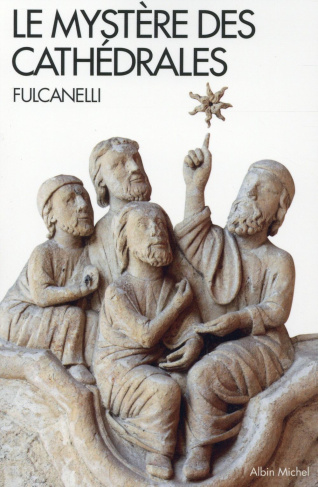
Le mystere des cathédrales. Et l'interprétation ésotérique des symboles hermétiques du Grand Oeuvre
En 1926, alors que l'alchimie avait depuis longtemps été reléguée au rang des vieilleries préscientifiques, il suffit d'un seul ouvrage pour la faire renaître comme le phénix de ses cendres : Le Mystère des cathédrales, signé d'un certain Fulcanelli. Dans ce texte unique en son genre, l'auteur se livre à une analyse serrée de la mystérieuse symbolique, tout à fait indépendante des motifs chrétiens, qui orne les grandes cathédrales de France, en particulier Notre-Dame de Paris. Il montre, d'une manière extraordinairement convaincante, comment ce langage pictural inscrit dans la pierre constitue en réalité une initiation complète aux opérations alchimiques les plus poussées. Ce livre est l'un des très grands classiques de l'ésotérisme contemporain, mais aussi un puissant témoignage de la richesse et de la complexité de notre patrimoine culturel, du Moyen Âge jusqu'au temps présent. Fulcanelli, d'une manière ou d'une autre, est toujours vivant et son enseignement nous interpelle, que l'on adhère ou non à l'alchimie.EpuiséVOIR PRODUIT17,85 € -

Une passion. Entre ciel et chair
Pour dire la passion éprouvée au plus profond de l'âme et du corps, Christiane Singer revit celle d'Héloïse, quintessence de l'amante et de la mystique. Elle nous donne à travers cette confession tout à la fois païenne et spirituelle, ce bréviaire fou, cette exaltation unique du plaisir et de l'extase, un texte qui restera parmi les plus intenses jamais écrits sur l'amour.Sur commande en 2-4 joursCOMMANDER8,85 € -

Zen et vie quotidienne. La pratique de la concentration
Cet ouvrage est le fruit de la pratique de zazen enseignée par Maître Taisen Deshimaru, expérience fondamentale de connaissance de soi, des autres, du monde et du cosmos. Comment vivre ici et maintenant? Comment observer son karma sur le chemin de la vie à la mort? Comment se concentrer instant après instant tout au long de la vie quotidienne afin de vivre pleinement le moment présent et ne pas laisser vainement passer le temps? Observation-concentration, aller de l'un à l'autre, telle est la méthode que nous propose Maître Deshimaru aussi bien à travers la posture de zazen que durant la vie quotidienne. C'est à partir de cette pratique millénaire et au-delà du temps, par l'entraînement du corps, de la respiration et de l'esprit qu'on devient un miroir où tout peut se réfléchir. Cet ouvrage, basé sur les principes de la médecine orientale, nous livre de plus un enseignement fondé sur l'ésotérisme du bouddhisme Mahayana et jamais révélé en Occident.Sur commande en 2-4 joursCOMMANDER11,10 €



De la même catégorie
-

L'invention des ailes
1803, Caroline du Sud. Fille d'une riche famille de Charleston, Sarah Grimké aspire dès le plus jeune âge à accomplir de grandes choses. Lorsque, pour ses onze ans, sa mère lui offre la petite Handful comme esclave personnelle, Sarah se dresse contre ce système inhumain. Entre les fillettes naît alors une véritable amitié, qui grandit au fil des années. Guidée par ses idéaux mais surtout par son affection pour Handful, Sarah n'abandonnera jamais l'espoir d'affranchir son amie. Superbe ode à la liberté et au courage, L'Invention des ailes dépeint les destins entrecroisés de deux personnages inoubliables, à la force de caractère incroyable, unis par le même profond désir d'indépendance.EpuiséVOIR PRODUIT24,70 € -

American Housewife
Après de premiers échanges d'une cordialité toute bourgeoise, deux voisines en viennent à se livrer une véritable guerre (chantage, insultes, incitation au divorce?) pour une histoire de lambris que l'une veut repeindre dans le hall de l'immeuble et l'autre pas. L'une d'elles finira par disparaître dans de mystérieuses conditions. Une nouvelle recrue d'un club de lecture est reçue par sa présidente qui lui en présente les membres, une à une. A mesure qu'elle raconte leurs goûts littéraires (gore, romance coquine) ainsi que leurs histoires intimes (insémination de l'une, morts suspectes des maris successifs de l'autre), elle distille son venin... Voici quelques exemples tirés de ces douze nouvelles empreintes d'un humour féroce. Des portraits cruels de femmes toutes plus névrosées les unes que les autres, qui sont aussi les révélateurs d'une société américaine aisée, qui tient à tout prix à se montrer sous son masque de perfection. Helen Ellis fait éclater les apparences et décrit la solitude de ces femmes au foyer, mais aussi le pouvoir qu'elles ont sur leur petit royaume ? leur appartement, leur club de lecture, leur immeuble, leur mari ?, allant parfois jusqu'à la pulsion criminelle? Une satire de notre époque qui contraint au bonheur et à sa représentation en toute circonstance.EpuiséVOIR PRODUIT18,00 € -

Rien dans la nuit que des fantômes
Le passé n'est jamais mort. Il n'est même pas passé." (William Faulkner)Voici trente ans que Billie James n'a pas remis les pieds dans le Mississippi. Un sacré tempérament, quelques dollars en poche et son chien Rufus au bout de sa laisse, elle débarque à Greendale et s'installe dans une bicoque décrépite où vécut autrefois son père. Ce dernier, poète noir de renom, est mort de manière accidentelle alors que Billie n'avait que quatre ans. La petite fille était présente au moment du drame, mais n'en a conservé aucun souvenir.Alors que les voisins font preuve d'un comportement étrange, que des rumeurs circulent, laissant soupçonner une tout autre vérité quant à la mort du père de Billie, celle-ci mène son enquête, aidée par son oncle et un drôle d'olibrius universitaire. Ensemble, ils vont exhumer de lourds secrets, dévoilant peu à peu l'histoire de ses origines mais aussi, en toile de fond, celle d'un pays marqué par les blessures toujours à vif de la ségrégation.Campé dans le décor à la fois somptueux et inquiétant du Sud profond, le premier roman de Chanelle Benz fourbit les armes du polar pour nous raconter ce qu'a été - et ce qu'est encore - l'Amérique tourmentée par les spectres les plus sombres de son Histoire.Traduit de l'anglais par David FauquembergChanelle Benz, britannique et antiguaise d'origine, vit et enseigne aujourd'hui à Memphis, dans le Tennessee. Elle est diplômée de l'université de Syracuse, où elle a eu pour mentor l'écrivain George Saunders, qui a salué en elle " une nouvelle voix sidérante de la fiction américaine ", et a également étudié l'art dramatique à l'université de Boston. Après un virtuose premier recueil de nouvelles, Dans la grande violence de la joie (Seuil, 2018), elle signe avec Rien dans la nuit que des fantômes son premier roman.Sur commande en 2-4 joursCOMMANDER21,00 € -

Front de lune
Avant de s'engager dans l'armée iranienne pour combattre l'ennemi irakien, Amir Yamini était un playboy, qui passait le plus clair de son temps à séduire les femmes et exaspérer sa très pieuse famille. Cinq ans plus tard, sa mère et sa soeur le retrouvent, amputé de son bras gauche, dans un hôpital psychiatrique pour soldats traumatisés. Quasi amnésique, Amir est hanté par la vision d'une mystérieuse femme sans visage, au front orné d'un croissant de lune. De retour à Téhéran, le fils prodigue est tour à tour salué comme un martyr de la Révolution islamique et confiné dans sa chambre comme un fou dangereux. Avec la complicité de sa soeur, il s'évade en escaladant le mur de leur jardin et repart sur le champ de bataille à la recherche de celle qu'il surnomme « Front de lune », accompagné dans ce périple au fil de la mémoire par deux scribes perchés sur ses épaules - l'ange de la vertu et l'ange du péché - qui consignent depuis toujours son histoire. Avec cette épopée amoureuse, guerrière et poétique d'une inventivité exubérante, porteuse d'un regard subtil sur la société iranienne contemporaine et empreinte d'une sensualité tout droit héritée de la grande tradition des contes persans, le grand romancier iranien Shahriar Mandanipour signe une oeuvre forte, envoûtante et pleine d'humanité.Sur commande en 2-4 joursCOMMANDER23,00 €


