Oeuvres romanesques complètes. Tome 1
68,00 €
En stock
EAN :
9782070113231
Ce volume contient les oeuvres suivantes: L'Abbaye de Northanger - Le Coeur et la Raison - Orgueil et préjugé. Appendices: Lady Susan - Les Watson. Oeuvres de jeunesse: Amour et amitié - Histoire de l'Angleterre. Avec, pour ce volume, la collaboration de Pierre Arnaud et de Jean-Paul Pichardie.
Commandé avant 16h, livré demain
Catégories
| Nombre de pages | 1111 |
|---|---|
| Date de parution | 04/10/2000 |
| Poids | 472g |
| Largeur | 116mm |
Plus d'informations
| EAN | 9782070113231 |
|---|---|
| Titre | Oeuvres romanesques complètes. Tome 1 |
| Auteur | Austen Jane |
| Editeur | GALLIMARD |
| Largeur | 116 |
| Poids | 472 |
| Date de parution | 20001004 |
| Nombre de pages | 1 111,00 € |
| Disponibilité | En stock |
Pourquoi choisir Molière ?
Efficacité et rapidité Commandé avant 16h livré demain
Économique et pratique Livraison dès 3,90 €
Facile et sans frais Retrait gratuit en magasin
Du même auteur
-
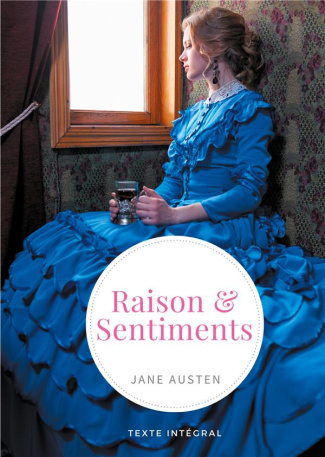
Raison et Sentiments
Raison et Sensibilité est le premier roman publié de la femme de lettres anglaise Jane Austen. Il paraît en 1811 de façon anonyme puisqu'il était signé by a Lady. Résumé : Après le décès de leur père, Henry Dashwood Elinor, Marianne et Margaret Dashwood ainsi que leur mère se trouvent privées de leur part d'héritage par leur demi-frère (né d'un précédent mariage de Henry Dashwood) qui se laisse facilement convaincre par sa femme Fanny qu'il ne leur doit rien. Leur situation financière considérablement diminuée, elles se retrouvent dans des circonstances particulièrement difficiles. Décidée à quitter le Sussex et le domaine de Norland, où sa belle-fille est venue s'installer en maîtresse sans tarder, Mrs Dashwood part avec ses filles pour le lointain Devon, où un généreux parent à elle, Sir John Middleton, lui a proposé de venir habiter sur ses terres, à Barton Cottage. Les jeunes filles sont rapidement acceptées par leur nouvelle société, particulièrement par Sir John, Lady Middleton et sa mère Mrs Jennings. Sense and Sensibility (traduit en français par Raison et Sensibilité, Raison et Sentiments, ou encore Le Coeur et la Raison) est le premier roman publié de la femme de lettres anglaise Jane Austen. Il paraît en 1811 de façon anonyme puisqu'il était signé by a Lady ("[signé] par une dame"). En effet, sa position sociale interdisait à Jane Austen de signer de son nom un roman destiné à la vente, mais elle ne voulait pas cacher qu'il était l'oeuvre d'une femme. Le texte initial, écrit vers 1795, probablement sous forme épistolaire, avait pour titre le nom des deux héroïnes, Elinor et Marianne, comme beaucoup de romans écrits par des femmes au XVIIIe siècle, mais le choix du titre définitif, pour la publication en 1811, semble indiquer une volonté didactique. Marianne Dashwood, ardente et romanesque, qui croit passionnément pouvoir s'affranchir des convenances, s'affiche avec le séduisant Willoughby dont elle est tombée amoureuse, tandis que sa soeur aînée, la raisonnable Elinor, cache le tendre sentiment que lui inspire son beau-frère, Edward Ferrars. Marianne devra apprendre à surmonter la trahison des sentiments, dans la douleur et avec l'aide de sa soeur, qui, de son côté, refuse stoïquement de rêver et se dévoue à sa famille. Publié par Thomas Egerton, et à compte d'auteur, à l'automne 1811, le roman est accueilli plutôt favorablement et paraît en français dès 1815, dans une traduction-adaptation très libre par Isabelle de Montolieu, sous le titre RaisonImpression à la demandeCOMMANDER22,00 € -

Persuasion
RESUME : "Persuasion" est le dernier roman de Jane Austen, publié à titre posthume en 1817. L'histoire se concentre sur Anne Elliot, une jeune femme de 27 ans qui vit avec sa famille aristocratique en déclin. Huit ans auparavant, Anne a été persuadée de rompre ses fiançailles avec Frederick Wentworth, un jeune officier de marine sans fortune. La décision, influencée par sa famille et son amie Lady Russell, a laissé Anne pleine de regrets. Le roman explore les thèmes de l'amour perdu et retrouvé, de la pression sociale et du changement de statut. Lorsque Wentworth revient dans la vie d'Anne, désormais riche et respecté, elle doit naviguer entre ses sentiments persistants et les attentes de sa famille. Austen dépeint avec finesse la société anglaise de l'époque, ses conventions et ses préjugés, tout en offrant une critique subtile de la manière dont les femmes sont souvent privées de leur propre voix. Le récit est une étude sur la résilience et la capacité à saisir une seconde chance en amour, tout en mettant en lumière les tensions entre tradition et changement. Avec son style caractéristique, Austen nous guide à travers les complexités émotionnelles de ses personnages, rendant "Persuasion" aussi pertinent aujourd'hui qu'à l'époque de sa publication. L'AUTEUR : Jane Austen, née le 16 décembre 1775 à Steventon dans le Hampshire, est l'une des romancières les plus célèbres de la littérature anglaise. Fille d'un pasteur, elle a grandi dans une famille nombreuse et cultivée, ce qui a fortement influencé son éducation et son amour pour la lecture et l'écriture. Austen a commencé à écrire dès son adolescence, mais c'est à l'âge adulte qu'elle a publié ses oeuvres les plus célèbres. Ses romans, parmi lesquels "Orgueil et Préjugés", "Emma" et "Raison et Sentiments", sont connus pour leur critique sociale et leur exploration des relations humaines. Ils dépeignent avec humour et perspicacité la société anglaise du début du XIXe siècle. Bien que ses oeuvres n'aient pas connu un succès immédiat, elles ont gagné en popularité après sa mort, et Austen est aujourd'hui considérée comme une figure centrale de la littérature anglaise. Elle est décédée le 18 juillet 1817 à Winchester, laissant derrière elle un héritage littéraire qui continue d'inspirer des générations de lecteurs et d'écrivains.Impression à la demandeCOMMANDER9,99 € -

Orgueil et Préjugés
Orgueil et Préjugés (Pride and Prejudice) est un roman de la femme de lettres anglaise Jane Austen paru en 1813. Il est considéré comme l'une de ses oeuvres les plus significatives et est aussi la plus connue du grand public. Rédigé entre 1796 et 1797, le texte, alors dans sa première version (First Impressions), figurait au nombre des grands favoris des lectures en famille que l'on faisait le soir à la veillée dans la famille Austen. Révisé en 1811, il est finalement édité deux ans plus tard, en janvier 1813. Son succès en librairie est immédiat, mais bien que la première édition en soit rapidement épuisée, Jane Austen n'en tire aucune notoriété : le roman est en effet publié sans mention de son nom ("par l'auteur de Sense and Sensibility") car sa condition de "femme de la bonne société" lui interdit de revendiquer le statut d'écrivain à part entière. Drôle et romanesque, le chef-d'oeuvre de Jane Austen continue à jouir d'une popularité considérable, par ses personnages bien campés, son intrigue soigneusement construite et prenante, ses rebondissements nombreux, et son humour plein d'imprévu. Derrière les aventures sentimentales des cinq filles Bennet, Jane Austen dépeint fidèlement les rigidités de la société anglaise au tournant des xviii et xix siècles.Impression à la demandeCOMMANDER19,99 € -
Orgueil et préjugés
A Longbourn, petit bourg du Hertfordshire, sous le règne du roi George III, Mrs Bennet est déterminée à marier ses cinq filles afin d'assurer leur avenir, compromis par certaines dispositions testamentaires. Lorsqu'un riche jeune homme, Mr Bingley, loue Netherfield, le domaine voisin, elle espère vivement qu'une de ses filles saura lui plaire assez pour qu'il l'épouse. Malheureusement il est accompagné de ses deux soeurs, Caroline et Louisa, plutôt imbues d'elles-mêmes, et d'un ami très proche, Mr Darcy, jeune homme immensément riche, propriétaire d'un grand domaine dans le Derbyshire, mais très dédaigneux et méprisant envers la société locale.Impression à la demandeCOMMANDER19,99 €


Du même éditeur
-
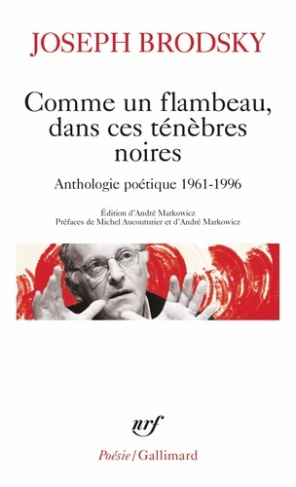
Comme un flambeau, dans ces ténèbres noires. Anthologie poétique 1961-1995
L'oeuvre de Joseph Brodsky (1940-1996), lauréat du prix Nobel de littérature en 1987, a été en partie occultée en France par le destin du poète, symbole de la dissidence du régime soviétique. Pour rendre compte de sa poésie d'une extraordinaire virtuosité formelle, liant l'intime à l'épique, au mythologique, et à de constantes préoccupations métaphysiques, André Markowicz a composé un volume qui réunit les poèmes publiés dans la collection "Du monde entier" en 1987 et 1993, replacés ici dans leur ordre chronologique, auxquels s'ajoute une sélection de poèmes inédits en français.En stockCOMMANDER11,40 € -
Au fond des années passées
Ce n'était pas un monde perdu dont je me souvenais, ces mois que nous avions passés ensemble dans les années quatre-vingt. C'était le même temps qui avait continué sa course, et avait fini par nous rattraper." De prime abord, la vie du narrateur semble terminée. Le diagnostic de maladie de Parkinson a d'abord été posé, puis sa femme l'a quitté. Mais un jour, au milieu d'un parc de Copenhague, il croise Anna, son amour de jeunesse, une femme libre qu'il a tant aimée autrefois. Aujourd'hui, elle ne se soucie pas de ce diagnostic, et elle l'entraîne dans le drame de sa propre vie, une histoire emblématique de notre temps, remplie d'abus de pouvoir et de trahisons. Jens Christian Grøndahl écrit une partition subtile où au milieu des souvenirs sont exposées les problématiques les plus actuelles - qui vont de la maladie à l'égarement politique, du fossé entre les générations aux violences faites aux femmes. Une fois encore, Jens Christian Grøndahl nous éblouit par sa capacité à saisir l'esprit du temps et à montrer comment l'on peut choisir de se relever après avoir subi une chute et faire le choix de la vie.Sur commande en 2-4 joursCOMMANDER21,00 € -
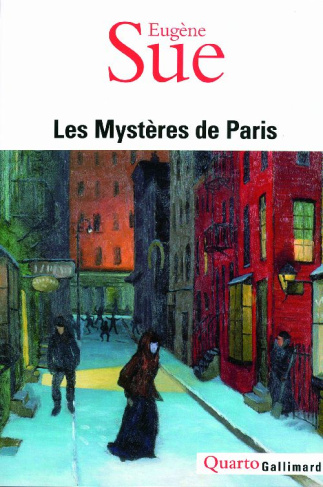
Les Mystères de Paris
Il y a dans Les Mystères de Paris une énergie sauvage: celle d'une cohorte de personnages maléfiques, malfrats hideux comme la Chouette, Tortillard - un anti-Gavroche -, le Maître d'école ou Bras-Rouge, criminels du grand monde comme le comte de Saint-Remy, monstres hypocrites comme le notaire Jacques Ferrand. Eugène Sue n'est pas avare de noirceur. Mais il y a aussi une sauvagerie du Bien, celle de Rodolphe, prince mélancolique venu à Paris à la recherche de sa fille perdue, impitoyable avec les méchants qu'il punit au mépris des lois. On doit à sa cruauté quelques-unes des scènes les plus stupéfiantes du roman: le châtiment du Maître d'école, ou le supplice de luxure imposé à Jacques Ferrand. Cette cruauté contraste avec la pureté morale de Fleur-de-Marie, comme avec la face solaire de Rodolphe, providence de tous les malheureux honnêtes dont il croise le chemin. Le roman exprime dans son ensemble une quête assoiffée de régénération morale de la société, par l'amélioration des mécanismes préventifs et répressifs (c'est le sens de l'engagement de Sue en faveur dans l'encellulement des criminels) ainsi que par l'invention de mécanismes d'incitation au Bien, police ou tribunal de la Vertu, qui doivent récompenser publiquement les actions exemplaires." Judith Lyon-Caen.EpuiséVOIR PRODUIT32,00 € -

Oeuvres complètes. 2 volumes : Tome 2, 1845-1851 ; Tome 3, 1851-1862
Le premier volume desEpuiséVOIR PRODUIT146,00 €



De la même catégorie
-
Oeuvres complètes. 2 volumes : Tome 2, 1845-1851 ; Tome 3, 1851-1862
Le premier volume desEpuiséVOIR PRODUIT146,00 € -

-

Album du Graal
Gallimard, Paris, 2009. In/12 reliure éditeur simili chagrin marron sous rhodoïde et étui illustré en couleurs, 240 illustrations en couleurs, 246 p. A l'état de neuf.Sur commande en 2-4 joursCOMMANDER30,00 € -